Kristina and I just returned from a trip to New York City. The trip had several objectives- celebrate our one year anniversary, visit and stay with dear friends in Dobbs Ferry, celebrate David Dunbar’s transition away from formal teaching, have lunch with my parents, pick up my motorcycle and to visit as many murals in NYC as we could. What a whirlwind!
The self-guided mural tour was informed primarily from the book, Murals of New York City; written by Glenn Palmer-Smith and photographed by Joshua McHugh. It is a pretty large coffee table book and no small task to carry around with us. Special thanks to V. Galgano for turning the book into a weight training program.

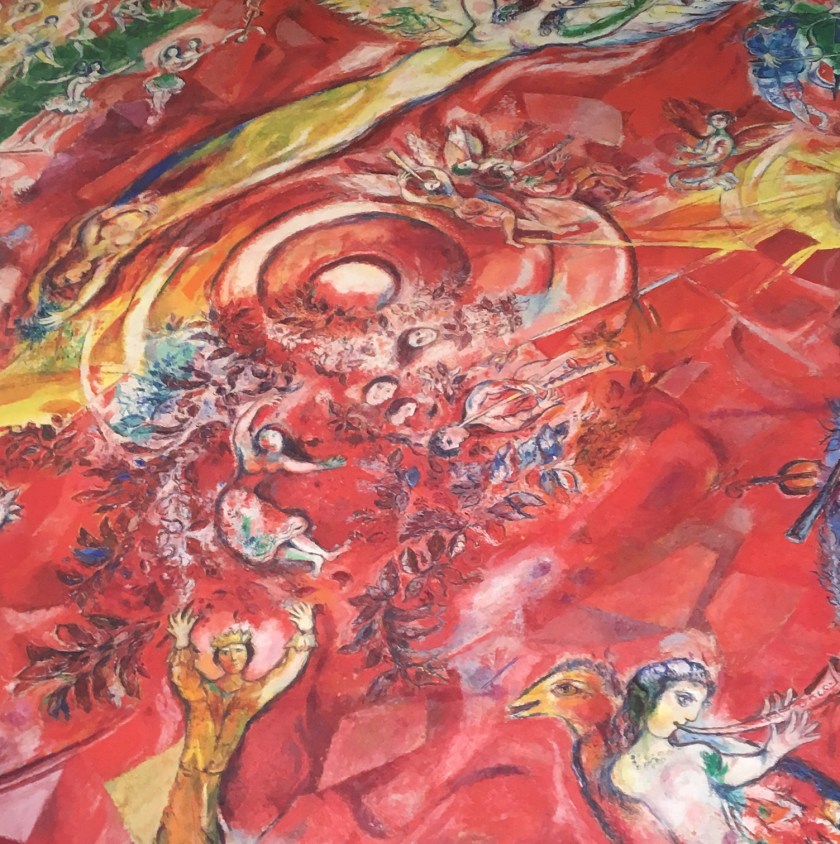
The classic, Grand Central Station. Even though commuters rush under it without a glance, this one is a marvel. Such soothing color harmony and easy integration with the architectural elements around it. Man’s attempt at drawing the heavens down to earth!
Through Grand Central Market, with its over-priced but beautiful goods, and across the street, Kristina, Vince and I entered the Chrysler Building. What a testament to inter-war vitality in NY.

Compositionally, this piece by Edmund Trumbull emanates in v shapes toward the apex of the spire. Full of information, it reminds me of the geometric period of ancient Greece. One has to only wonder if it has been returned to its original glory after varnishes have dulled its color. Nevertheless, it is wonderfully unified tonally and chromatically and in accord with both the Moroccan marble and art deco interior.
Next stop, Rockefeller Center.
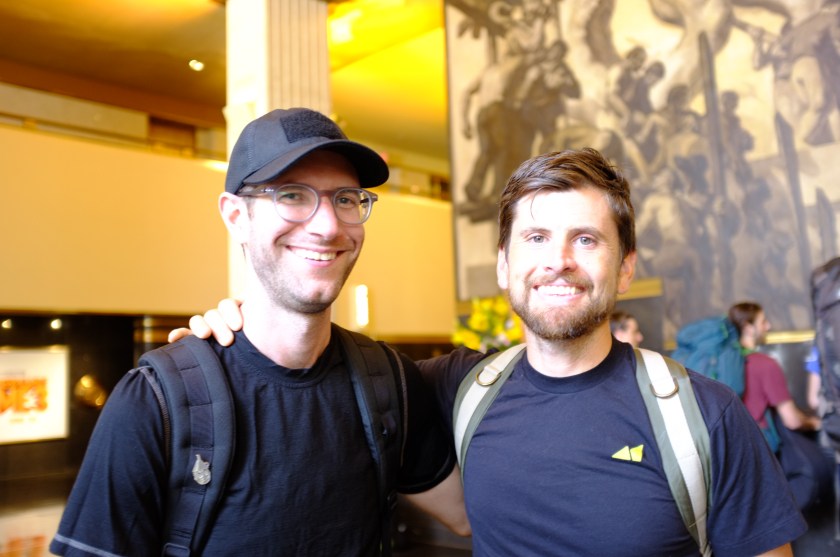
This cycle of grisaille paintings certainly aspires to the monumental. When you enter, you stand below a towering Colossus. It is even slightly uncomfortable, or just funny.
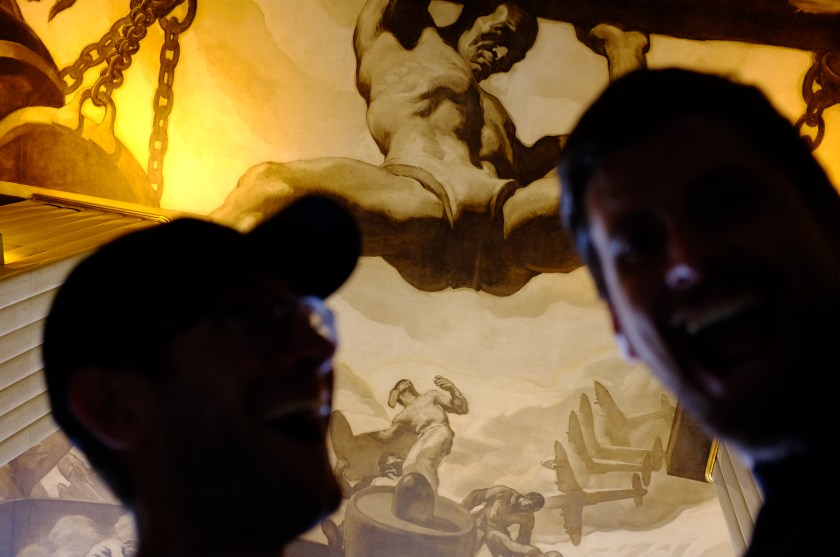
This is the infamous site whereupon Diego Rivera’s mural, Man at the Crossroads, was chipped off the walls. I have had the good fortune to see a replica that Rivera made in Mexico City and I believe that Rockefeller Center is worse off for the choice to remove it.
We hopped on Citibikes and rode down to Tower One, the Oculus and 9/11 museum.


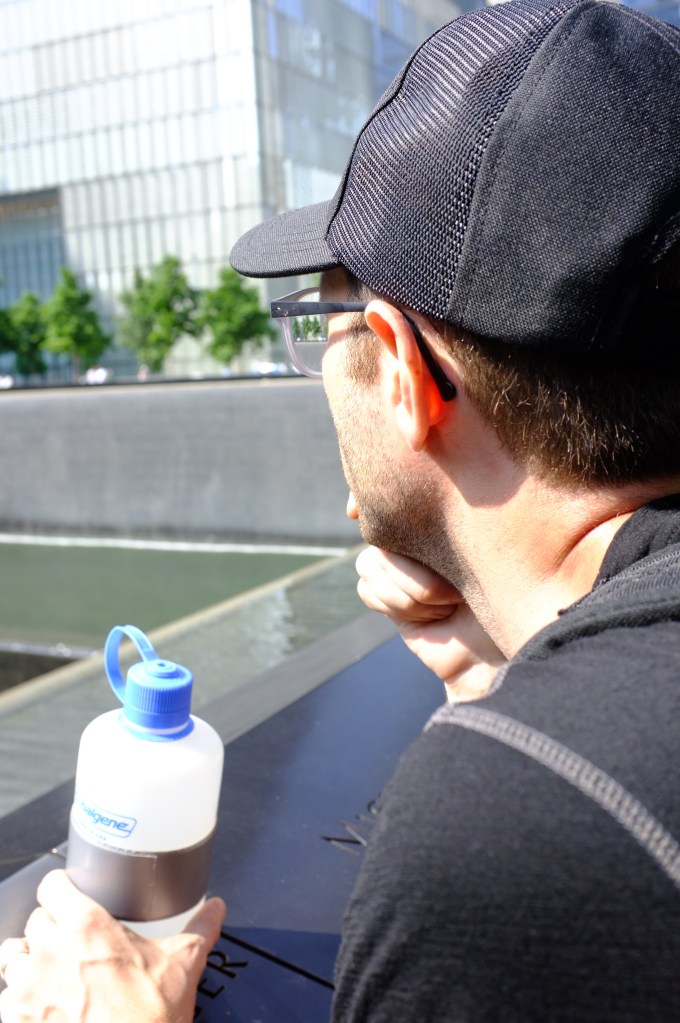


This piece was surprisingly powerful. The artist chose to paint with water color different tints of blue, trying to recollect the color of the sky on 9/11/01 above the World Trade Towers. The papers surround a relevant quote by Virgil.
The museum was pretty rough. We chose to abandon our bikes and take the Staten Island Ferry. The Statue of Liberty and Ellis Island were good reminders of NYC’s profound, challenging but also uplifting, human history.


The following day we visited the Met, where we took in exhibitions on Caravaggio, Irving Penn, the Modernists and Classical Greece. A walk through the park on a spectacular day took us to Old King Cole Bar. 


Maxfield Parrish’s mural is a strong delivery of whimsy and polish. He knows what to subordinate and what to accent, all in service of the depiction of a fart!
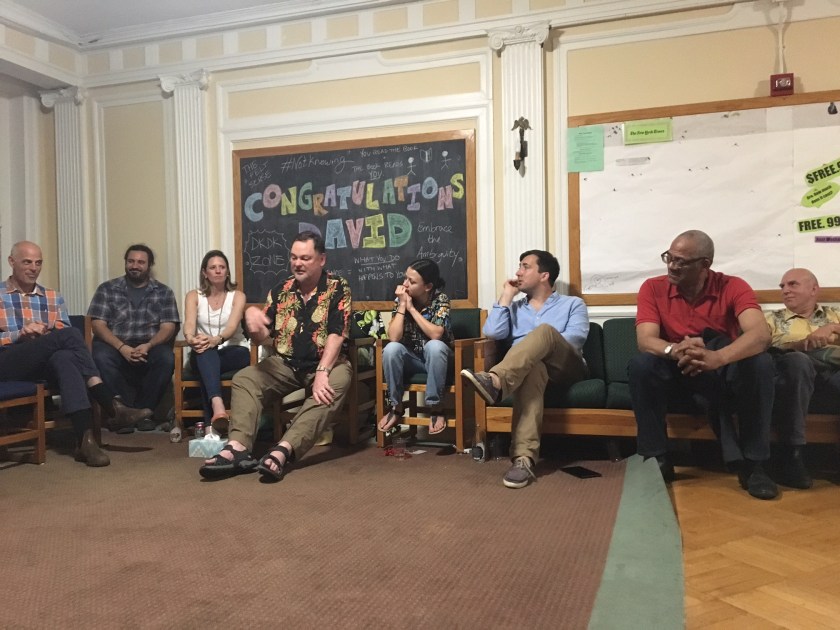
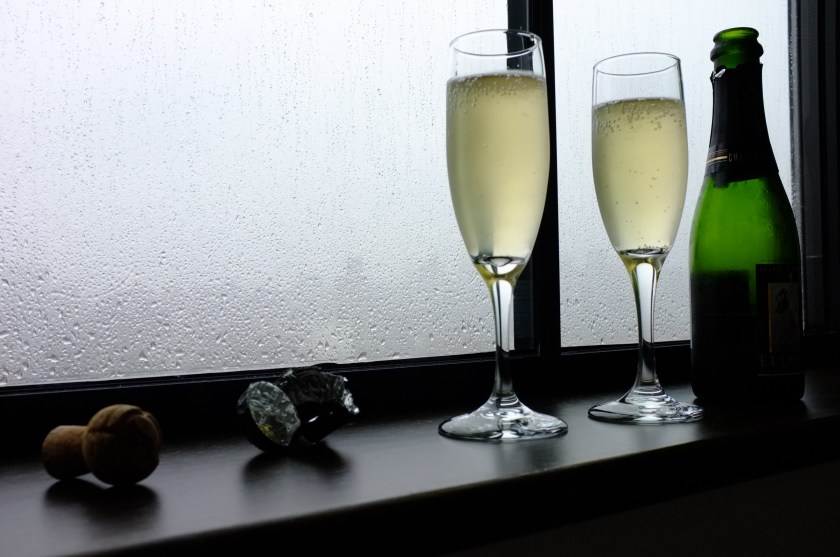
Back to CityTerm in time to celebrate with David and company. It was a wonderful evening, full of inspiring educators, toasting an extraordinary man.
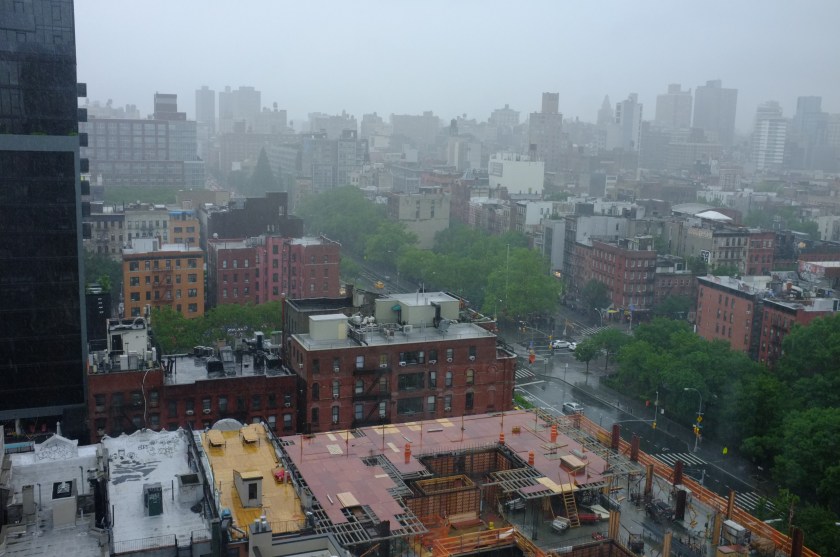
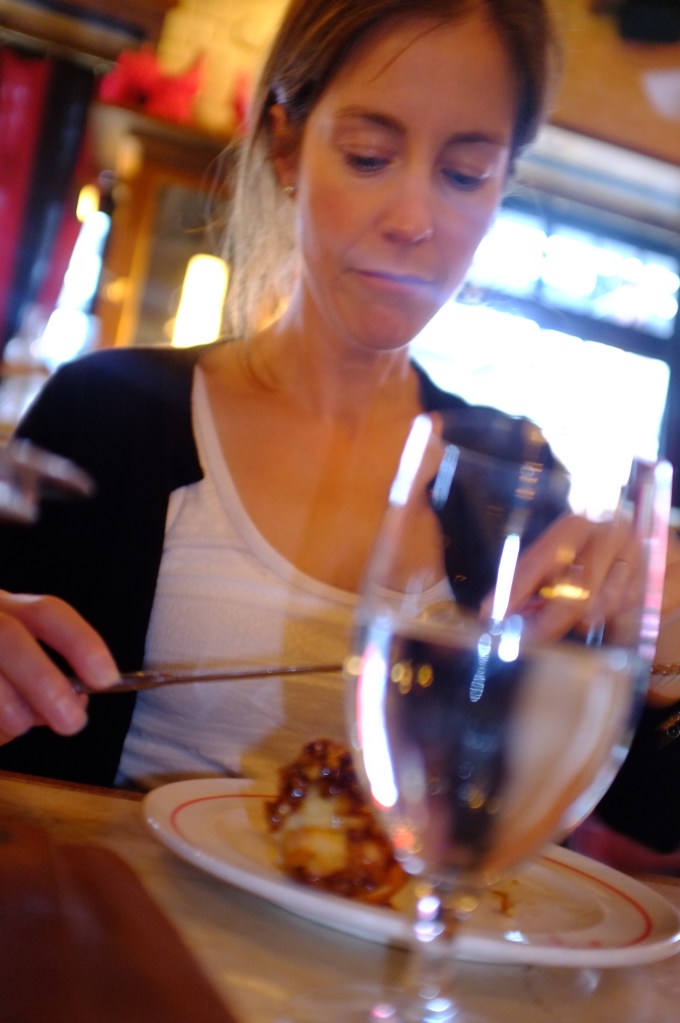
Back in the city the following day. We checked into our hotel on Ludlow St. just in time to avoid a deluge of rain. We had a great meal at the Leopard, of Cafe des Artistes and got to watch Misty Copeland perform as Odette and Odile in Swan Lake.


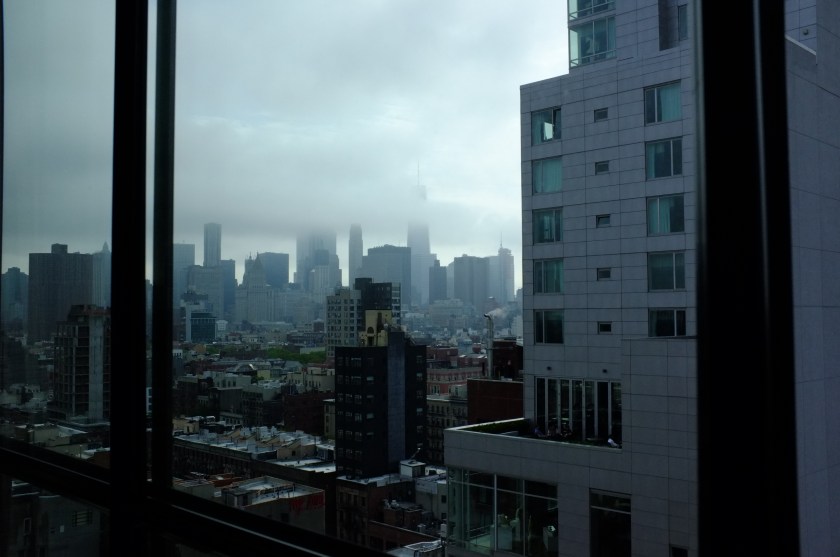
A morning run over the Brooklyn Bridge and then it was time to hit the road. Over all, a trip for the books!

















































 Adrian Eisenhower